

Understanding The Importance Of Industrial Drying Equipment In Manufacturing Processes
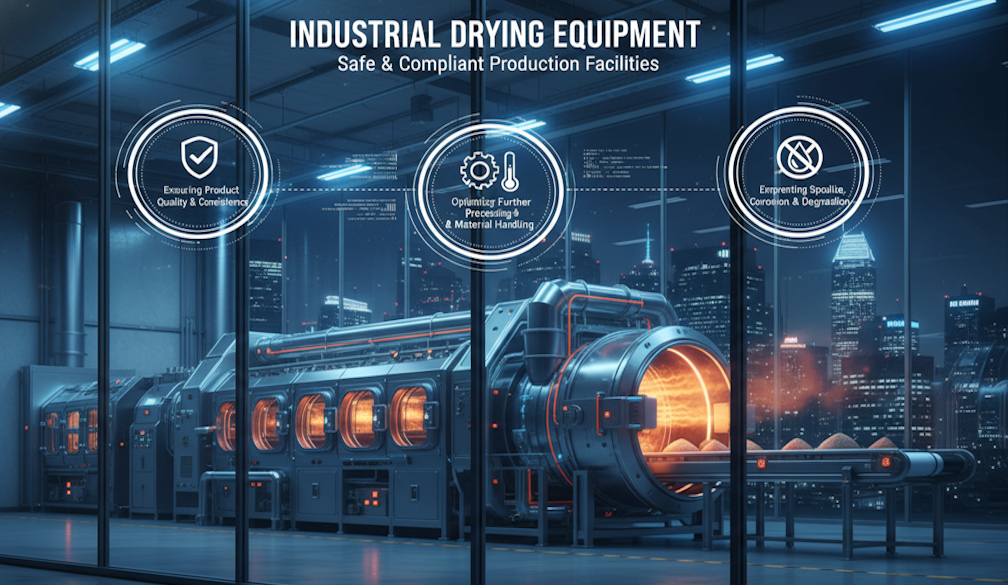
Moisture control is a crucial part of many industrial processes. In sectors such as food production, pharmaceuticals, chemicals, and manufacturing, removing excess moisture from materials is necessary to maintain product quality, improve shelf life, and ensure safe processing. This is where industrial drying equipment becomes essential, as it helps industries efficiently remove moisture from materials, gases, and production environments.
Why Moisture Control Is Essential In Industrial Operations
Moisture can cause a variety of problems in manufacturing environments. In food production, excess moisture can promote microbial growth and reduce the shelf life of products. In chemical manufacturing, moisture contamination can interfere with reactions and compromise the purity of materials.
Industrial drying systems help prevent these issues by removing unwanted moisture from raw materials, compressed air systems, and production environments. This ensures that products maintain consistent quality while production lines operate smoothly.
Moisture control also protects sensitive equipment. Excess humidity can lead to rust, corrosion, and component failure in machinery. By maintaining controlled dryness levels, industries can extend the lifespan of their equipment and avoid costly repairs.
How Industrial Drying Equipment Works
Industrial drying equipment functions by removing moisture from materials or air using heat, airflow, or specialised drying technologies. Depending on the application, these systems may use hot air circulation, desiccant materials, or refrigeration methods to extract moisture.
Hot air dryers operate by circulating heated air around the material, causing moisture to evaporate. This method is commonly used in industries such as food processing and agricultural product drying.
Desiccant dryers use moisture-absorbing materials to remove water from air or gases. These systems are particularly useful in compressed air systems where extremely dry air is required for equipment operation.
Refrigerated dryers work by cooling air to condense moisture, which is then separated and removed from the system. This process is commonly used in manufacturing environments where compressed air systems require moisture control.
Each method is designed to address specific industrial requirements depending on the type of material or process involved.
Applications Across Multiple Industries
Industrial drying equipment is used in a wide range of industries because moisture control is critical for maintaining product quality. In the food and beverage industry, drying systems help remove moisture from ingredients and finished products to extend shelf life and prevent spoilage.
Pharmaceutical manufacturing also relies heavily on drying processes. Many medications require carefully controlled moisture levels during production to ensure product stability and effectiveness.
Chemical industries use drying equipment to remove moisture from compounds and maintain precise reaction conditions. In plastics manufacturing, drying is essential for preparing raw materials before they are processed into finished products.
Agriculture and grain processing industries also use industrial drying systems to preserve crops and maintain product quality during storage and transport.
Improving Product Quality And Consistency
Maintaining consistent product quality is one of the main reasons industries invest in reliable drying systems. Excess moisture can lead to defects, spoilage, or changes in product texture and composition.
For example, in food processing, improper drying may result in products that spoil quickly or lose their intended flavour and texture. In manufacturing, moisture can cause materials to degrade or react unpredictably during production.
Industrial drying systems help ensure that moisture levels remain within controlled limits. This consistency helps manufacturers maintain high product standards and meet regulatory requirements.
Quality control is especially important in industries where strict safety standards must be followed. Reliable drying processes contribute to compliance with these standards while maintaining efficient production.
Protecting Industrial Equipment
Moisture does not only affect products; it can also damage machinery and production systems. Water vapour and humidity can cause corrosion in metal components, damage electrical systems, and reduce the efficiency of compressed air systems.
Drying equipment helps eliminate these risks by maintaining controlled moisture levels in industrial environments. When air and materials remain dry, machinery operates more efficiently and experiences less wear over time.
This preventative approach reduces maintenance costs and helps companies avoid unexpected equipment failures that could disrupt production schedules.
Energy Efficiency In Modern Drying Systems
Energy efficiency has become an important factor in industrial equipment design. Modern drying systems are developed with advanced technologies that reduce energy consumption while maintaining effective moisture removal.
Some drying systems recover and reuse heat generated during the process, improving overall efficiency. Others incorporate automated controls that monitor humidity levels and adjust operations accordingly.
By optimising energy use, industries can reduce operational costs while maintaining high productivity levels. Energy-efficient drying equipment also contributes to environmental sustainability by lowering overall energy demand.
Selecting The Right Drying Equipment
Choosing the appropriate drying system depends on several factors including the type of material being processed, required moisture levels, and production scale. Engineers evaluate these requirements carefully to determine the most effective drying method.
Material characteristics such as particle size, heat sensitivity, and moisture content influence the type of equipment used. Some materials require gentle drying processes to prevent damage, while others can withstand higher temperatures.
Production capacity is another important consideration. Large-scale manufacturing operations require drying systems that can handle continuous production while maintaining consistent results.
Working with experienced equipment providers helps ensure that the selected drying system meets the specific needs of the industry and production process.
Conclusion
Moisture control is a critical component of modern industrial operations. Efficient drying systems help industries maintain product quality, protect equipment, and improve production efficiency. By removing excess moisture from materials and air systems, industrial drying equipment supports reliable manufacturing processes across a wide range of industries.
As industries continue to focus on efficiency, sustainability, and product quality, advanced drying technologies will remain an essential part of modern production systems. Properly designed and maintained drying equipment ensures consistent results while supporting long-term operational success.